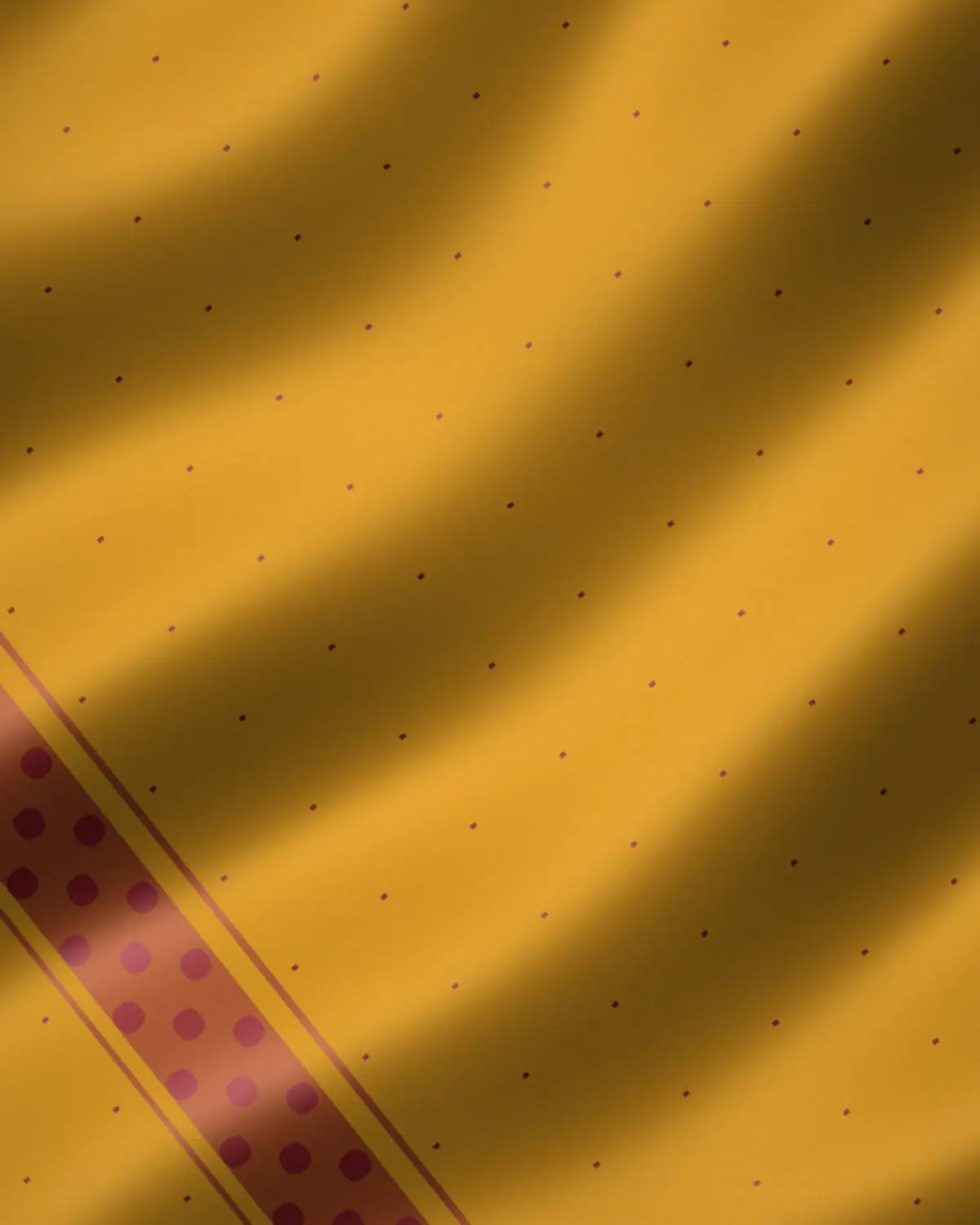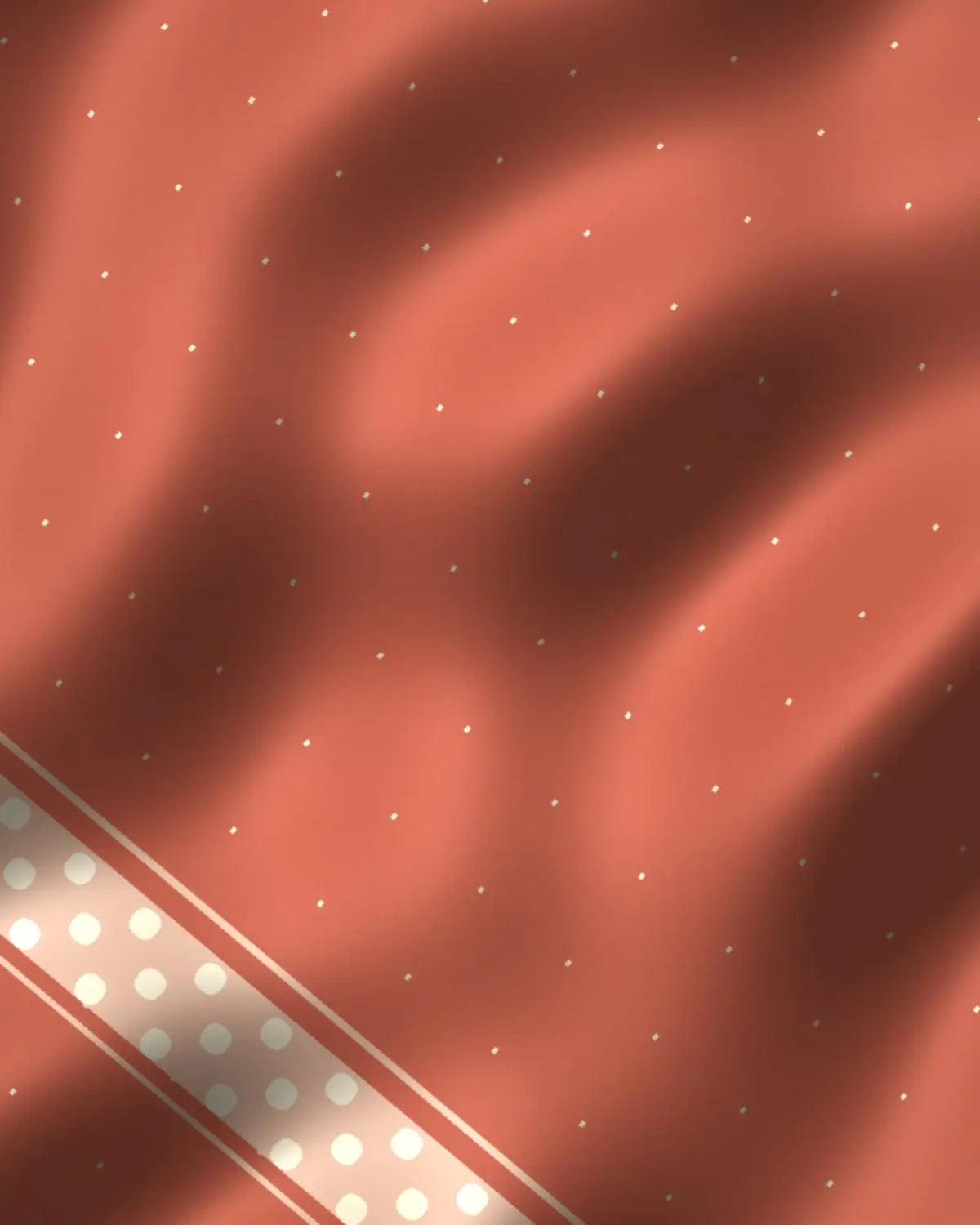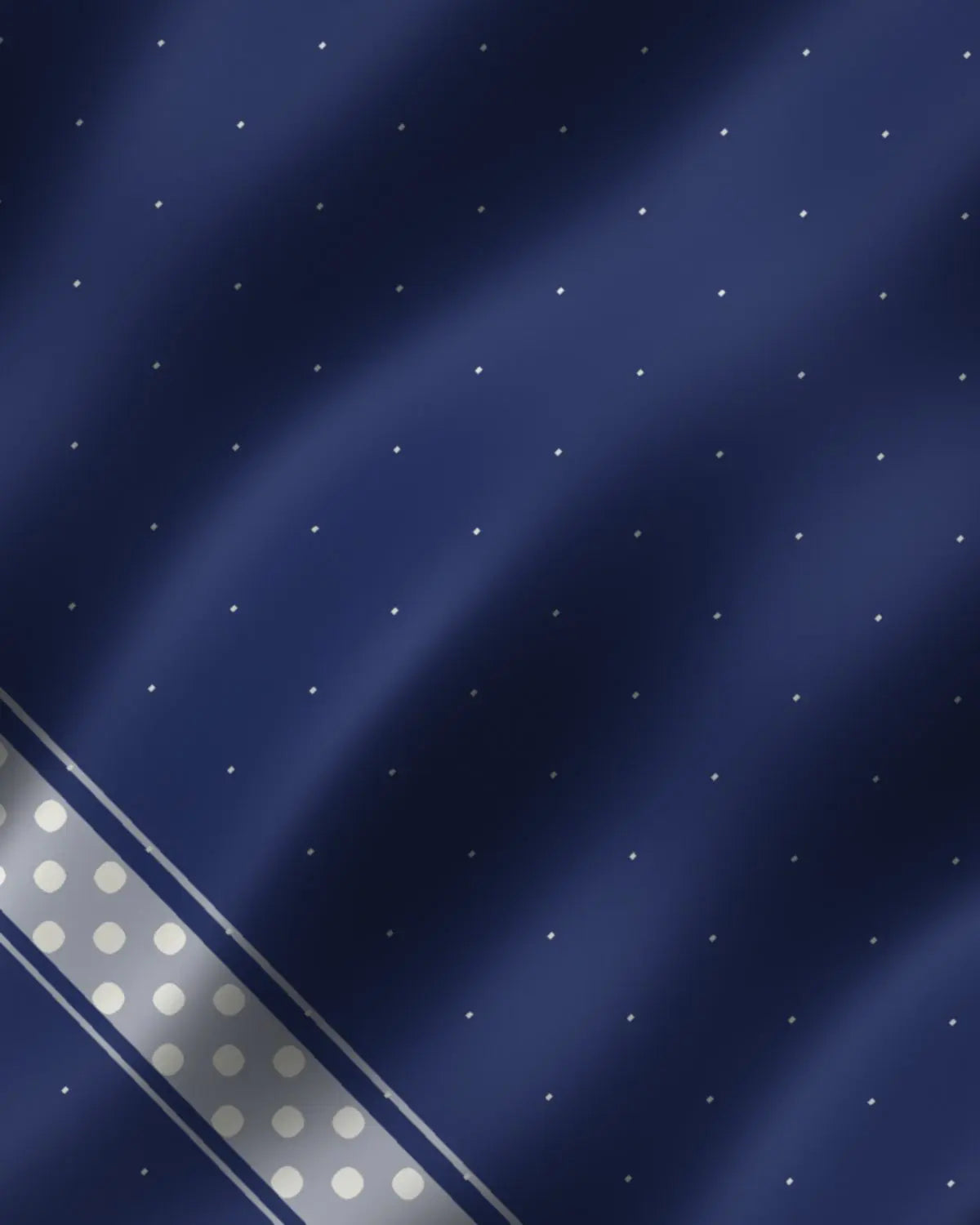
Kadwa Banarasi
Woven in the kadwa method, where every motif is worked as a separate weft rather than carried across the back of the cloth.
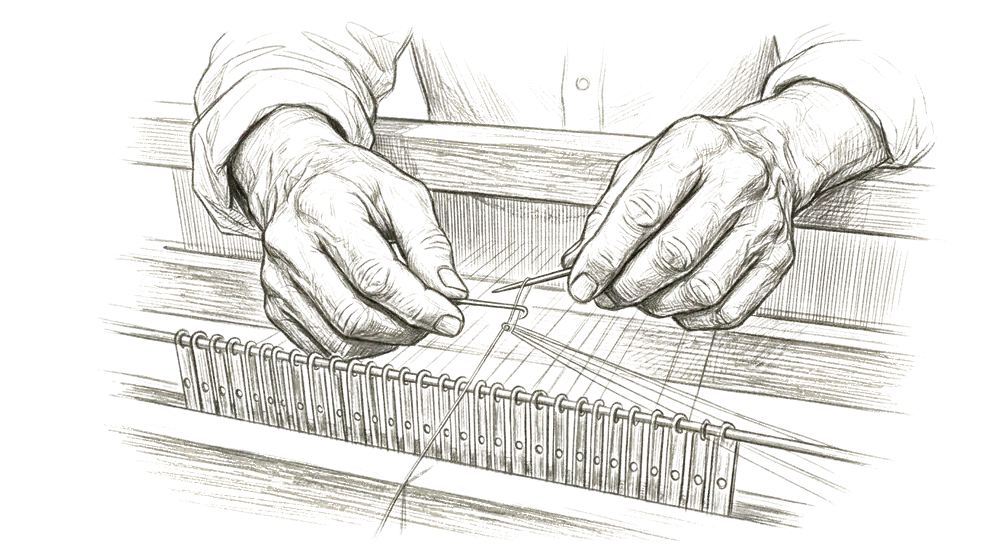
Woven in the kadwa method, where every motif is worked as a separate weft rather than carried across the back of the cloth. Nothing is carried; the weaver stops, cuts and starts again at each buti, which is why a kadwa length takes months and why the reverse of the pallu is as clean as its face.
The anatomy of a saree
Border. Woven along both edges. In some traditions it is woven separately and locked into the body by hand.
Pallu. The end that falls over the shoulder, and where a weaver spends the most time. Often finished with a fine joining line.
Body. Plain, checked or scattered with small buttis. The weight of the body decides how the saree pleats.
Three ways to tell a real one

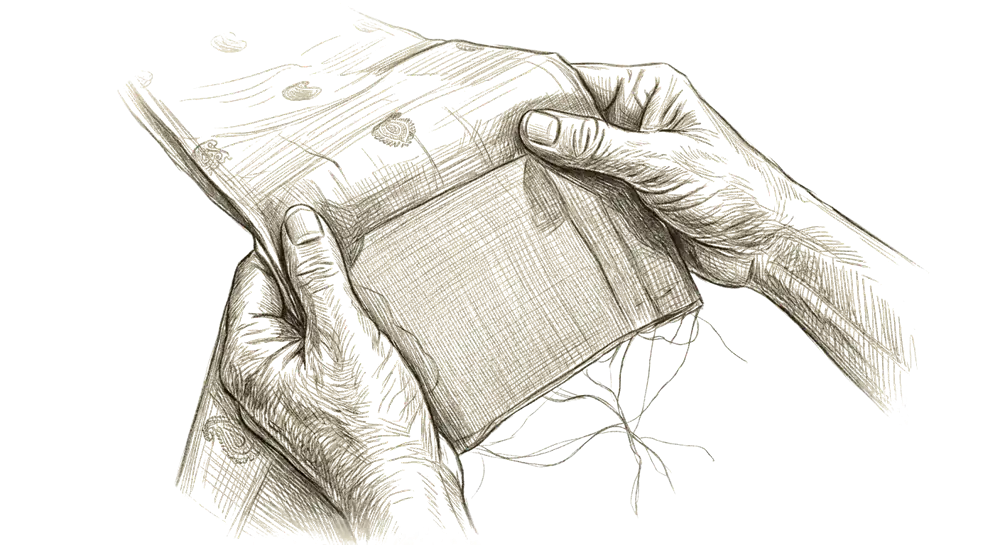
Turn the pallu over
In a kadwa weave the reverse is almost as clean as the face. Long loose threads behind each motif point to a cut-work or machine piece.
Look closely at the motifs
Hand-woven buttis are never quite identical; each one sits a little differently from its neighbour.

Ask for the paper trail
Silk Mark and the Banaras GI label are worth asking about. Ask whether a piece carries them.


Caring for it
Dry clean only
The first few times especially, so the colour sets.
Wrap it in muslin
Never plastic. Silk needs to breathe.
Refold it
Every few months, along new lines, so the zari does not crack.
Perfume first
Then the saree. Spray dulls zari.