Tussar
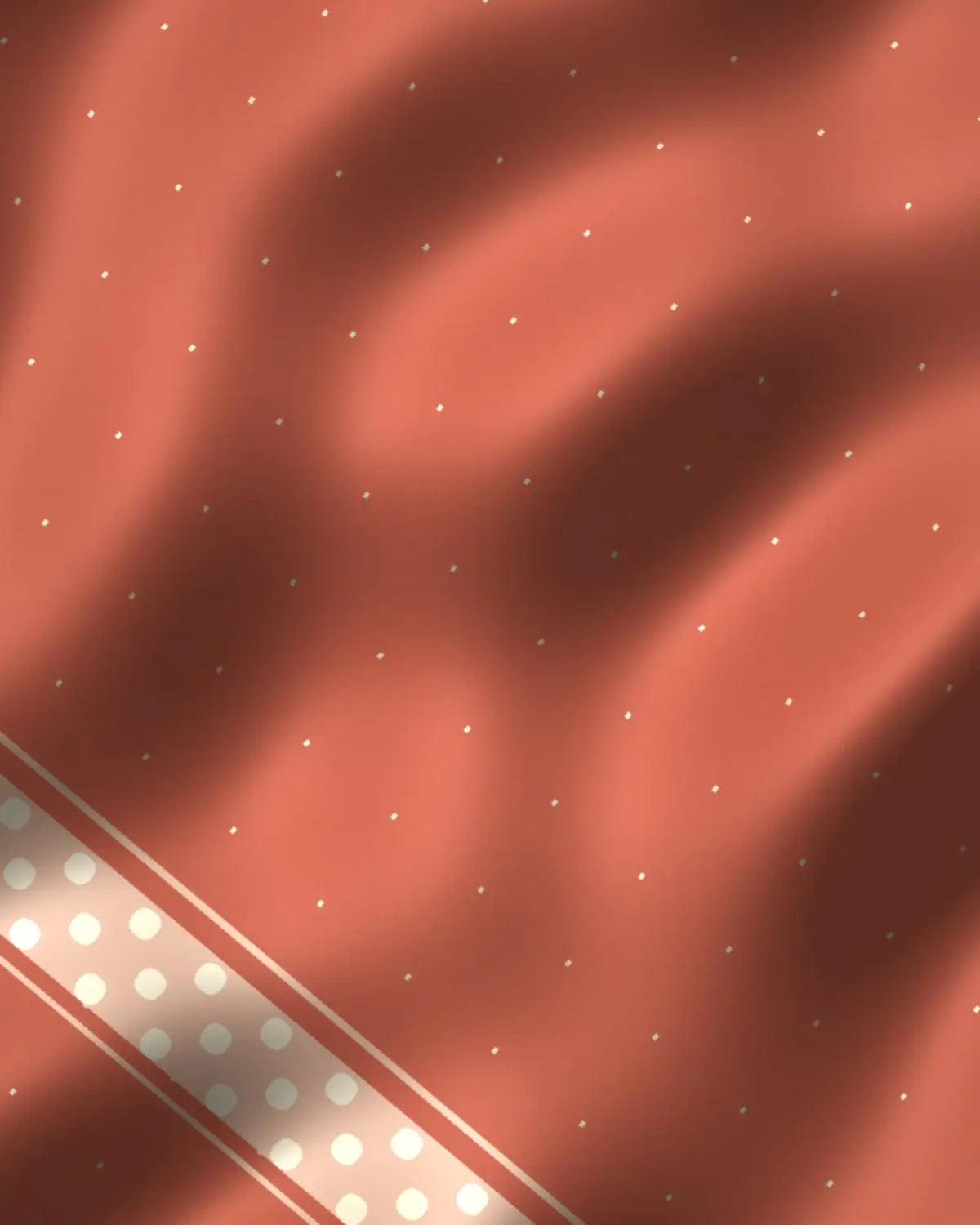
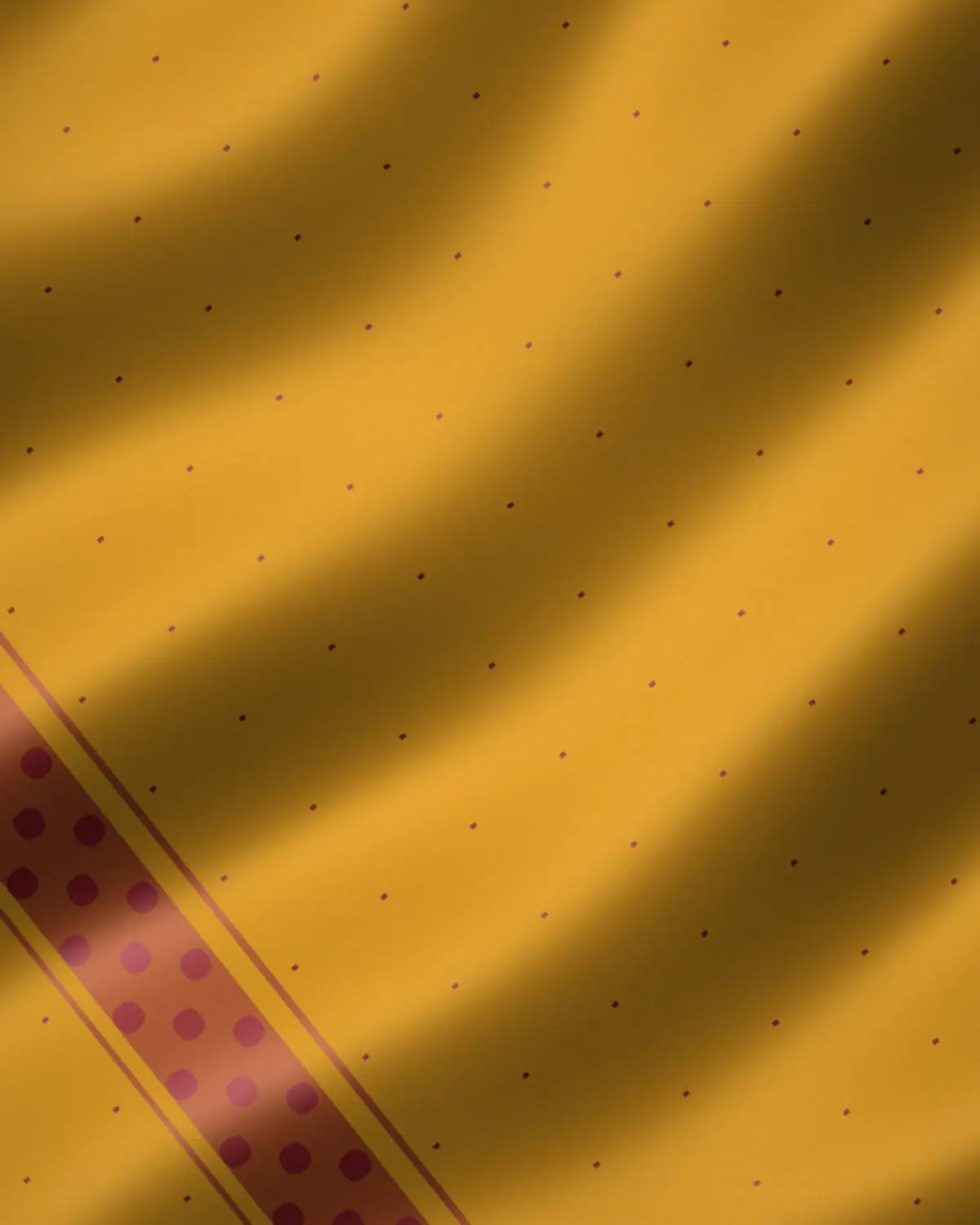
Tussar is wild silk, spun from cocoons gathered in the forest rather than raised on mulberry.
Tussar is wild silk, spun from cocoons gathered in the forest rather than raised on mulberry. The yarn is coarser and uneven, with a natural gold cast that no dye can give, and handwoven it keeps a dry, textured hand that softens with every wear. It is the silk for long, warm days, and for people who like to feel the cloth.
The anatomy of a saree
Border. Woven along both edges. In some traditions it is woven separately and locked into the body by hand.
Pallu. The end that falls over the shoulder, and where a weaver spends the most time. Often finished with a fine joining line.
Body. Plain, checked or scattered with small buttis. The weight of the body decides how the saree pleats.
Three ways to tell a real one

Look at the sheen
Tussar glows gold even where it is undyed; a flat or glassy shine points to a blend.
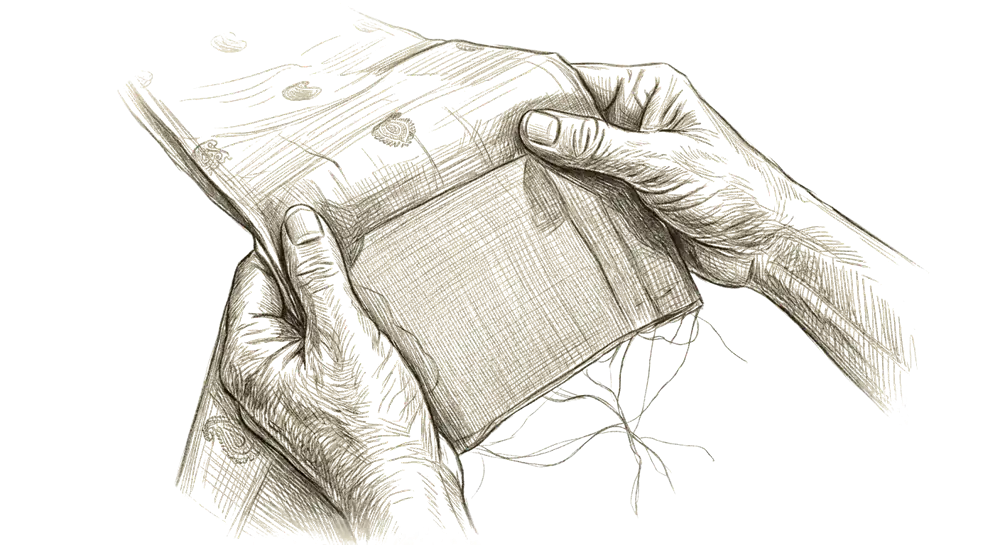
Feel the yarn
Small slubs and thick-thin threads are expected. A perfectly even surface is not tussar.

Check the weight
It is lighter than mulberry silk of the same length, and drapes close to the body.
Pieces in this weave


Caring for it
Dry clean only
The first few times especially, so the colour sets.
Wrap it in muslin
Never plastic. Silk needs to breathe.
Refold it
Every few months, along new lines, so the zari does not crack.
Perfume first
Then the saree. Spray dulls zari.