
Sambalpuri & Odisha Silks
Sambalpuri silk is ikat with its own vocabulary: conch, wheel and flower motifs, temple borders, and patterns tied into the thread before weaving.
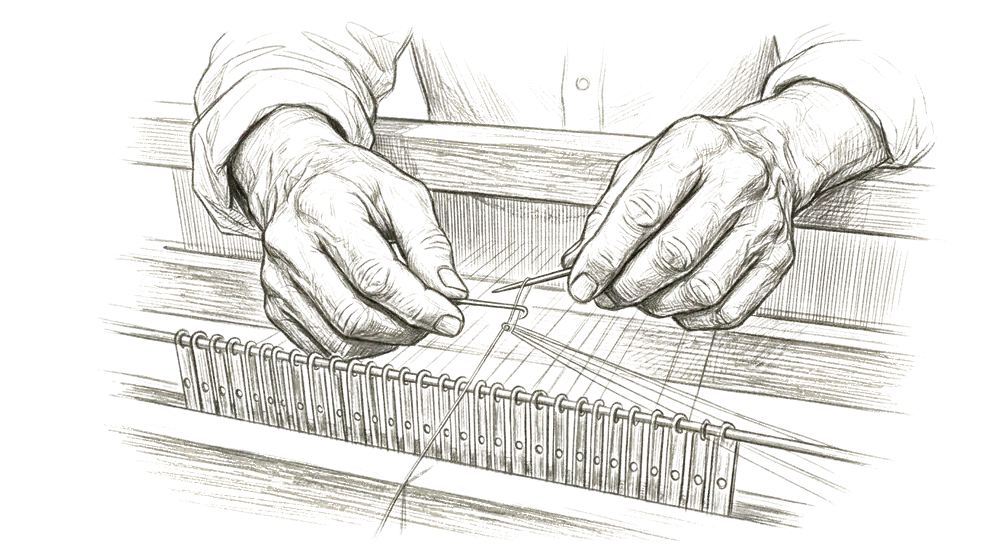
Sambalpuri silk is ikat with its own vocabulary: conch, wheel and flower motifs, temple borders, and patterns tied into the thread before weaving. Each colour is bound and dyed separately, so a single saree can pass through the dye bath many times before it reaches the loom.
The anatomy of a saree
Border. Woven along both edges. In some traditions it is woven separately and locked into the body by hand.
Pallu. The end that falls over the shoulder, and where a weaver spends the most time. Often finished with a fine joining line.
Body. Plain, checked or scattered with small buttis. The weight of the body decides how the saree pleats.
Three ways to tell a real one

Look at the motifs
Conch, wheel and flower shapes with soft ikat edges.
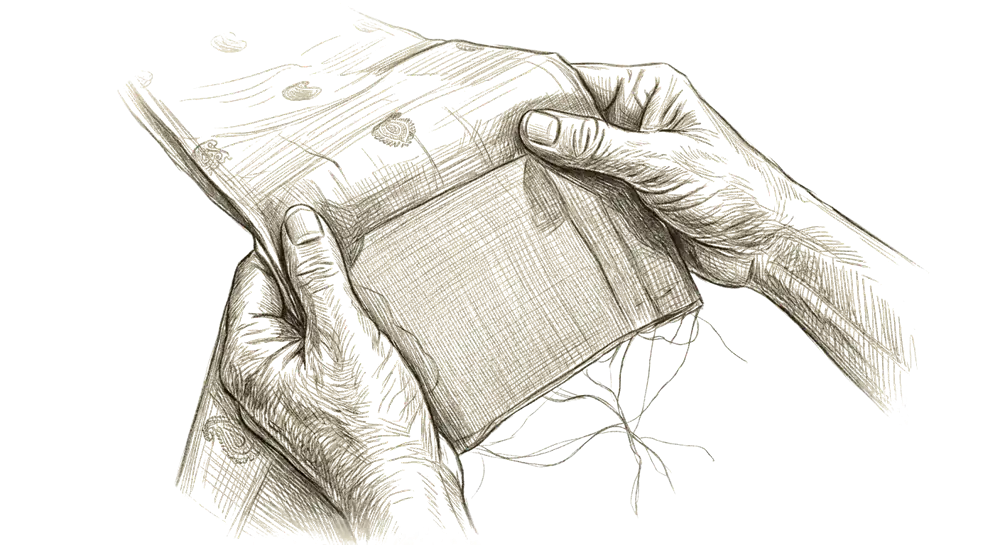
Turn it over
The design shows on both faces, because it was dyed into the yarn.

Check the border
Temple borders are woven in, not printed.
Pieces in this weave

Caring for it
Dry clean only
The first few times especially, so the colour sets.
Wrap it in muslin
Never plastic. Silk needs to breathe.
Refold it
Every few months, along new lines, so the zari does not crack.
Perfume first
Then the saree. Spray dulls zari.